





Palmae
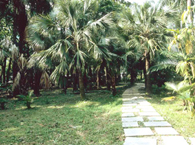
The Palm family belongs to the monocot order, most of which are restricted to tropical or subtropical climates, which includes around 3,300 species. They are evergreen plants, also they are called in Chinese: Ye - coconut, Lv - palm, Zong – palm, Kui – certain herbaceous plants with big flowers; it is called Palm in English. The palm usually has a single unbranched columnar trunk topped with a tuft of stout pinnate or palmate leaves. Bundles of vascular tissue are scattered throughout the trunks and no xylem (real wood). The leaves of palms, often large, are formed a few at a time at the stem tips. They have large, sheathing bases that may leave semicircular scars on the stems when they fall off. Some species’ leaf sheaths dried out and left fibres which make the coir cape. The flowers are usually small fragrant but are often borne in great masses and they are borne in axillary clusters (inflorescences) which covered by large spadix. The flowers are dioecious. Flower parts are in threes, with three sepals and petals and six stamens. The pistil usually consists of three separate or fused carpels. The fruit is a berry, a drupe or a nut. Coconut palm provides all the basic necessities of human life from oil, in cuisine, sugar or wine making, collection, herbs, timber, furniture and handcraft materials…etc, mostly in ornamental value. The variety shape ranges from thick, tall, skinny, straight, short, slender, stout to round, pretty handy for ornamental use. There are about 60 species in this Garden, including beside the major route in the Garden, such as Roystonea regia, Livistona chinensis, Hyophorbe verschaffeltii…etc.


